Miss Jane Marple
"The worst is so often true."
-- Miss Jane Marple (They Do It with Mirrors)
Mea culpa! I confess: When I first picked up an Agatha Christie murder mystery to read I couldn't see what all the fuss was about. The prose simply rambled on, and I was unable to discern any logical flow or direction that it was going in.
Still, there were those whom I loved and trusted who simply adored Agatha Christie detective mysteries. My mother, for one; an aunt, for another. And, of course, there were others. I knew I would have to try again one day. When I finally picked up another Agatha Christie, I was shocked to find the sentences were to the point, clear, and lucid. Simple sentences: you know, the kind we were taught to write in English class -- subject; verb; predicate.
All over the world, Christie's murder mysteries have been perennially in print -- Africa, India, America, rural towns, urban cities, suburban homes. It seems everyone loves an Agatha Christie mystery. And with good reason. Her storytelling is superb (now that I've given myself the opportunity to read more of them!).
When I was drawn into a late-night television rerun of one of Margaret Rutherford's movie appearances as Miss Jane Marple -- which I enjoyed, by the way -- my mother popped her head over my shoulder. "Oh," she said. "There's Margaret Rutherford as Miss Marple. She's thoroughly delightful, of course; but she's not Miss Marple. Not as Agatha Christie depicted her."
I realized that the first book I had picked up was a Miss Marple book. I discovered, as well, that my later attempt was with a Hercule Poirot book. And then I realized -- how simple, yet how profound! Even though the Miss Marple book was written in third person, the prose rambled as a portrayal of Miss Marple. Even though Miss Marple wasn't in that particular scene, she permeated the prose. Whereas Poirot was methodical, efficient, and fussy, he was reflected in the prose as well. (Of course, I'm not including first-person narratives by other characters in this introduction. This was, after all, my initial epiphany into the worlds of Miss Jane Marple and Mr. Hercule Poirot.)
Oops. Did I say the Miss Marple books rambled? Not so for all of them. In my first venture, I had simply stumbled across one that did so.
|
The Murder at the Vicarage (1930)introduces Miss Marple. Agatha Christie at first intended only to write one book about the character, but discovered how enjoyable she was. In her autobiography, Christie wrote, "Murder at the Vicarage was published in 1930, but I cannot remember where, when or how I wrote it, why I came to write it, or even what suggested to me that I should select a new character -- Miss Marple -- to act as the sleuth in the story." But she also said in her autobiography, " I think it is possible that Miss Marple arose from the pleasure I have taken in portraying Dr. Sheppard's sister in The Murder of Roger Ackroyd. She had been my favorite character in the book -- an acidulated spinster, full of curiosity, knowing everything, hearing everything: the complete detective service in the home." Indeed, she later told Julian Symons that she preferred Miss Marple to Hercule Poirot. In the Foreword to The Bedside, Bathtub & Armchair Companion to Agatha Christie (edited by Dick Riley and Pam McAllister), Symons wrote about an interview he had with Agatha Christie: "What about Poirot, what did she feel about him? Well, she had lots of letters from people, saying that she must love him. 'Little they know. I can't bear him now.' Because of her readers' reactions it was impossible to get rid of him, but she much preferred Miss Marple." |
Click Image to 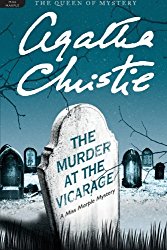 Click the image below to  Click Image to 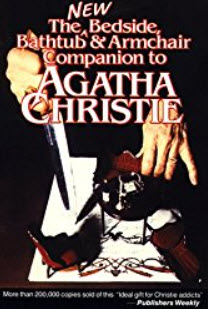 Click the image below to  |
The Body in the Library (1942)
The Moving Finger (1943)
A Murder Is Announced (1950).
They Do it With Mirrors, aka Murder With Mirrors (1952)
A Pocket Full of Rye (1953)
4.50 from Paddington, or What Mrs. McGillicuddy Saw (1957)
The Mirror Crack'd (1962)
A Caribbean Mystery (1964)
At Bertram's Hotel (1965)
Nemesis (1971)
Sleeping Murder (written around 1940, published 1976)
|
Click Image to 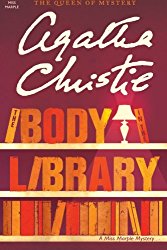 Click the image below to  |
Click Image to 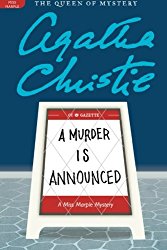 Click the image below to  |
Ultimately, the BBC dramatized all of the Miss Marple classics in a superb series starring Joan Hickson. She is perfect in the role. Some way through the series, she was being interviewed and she disclosed a letter she had recently come across. It was from Agatha Christie to her. Years earlier, Agatha Christie had seen her on stage and wrote telling her she thought she would be perfect for the role of Miss Marple. (Ms. Hickson put the letter in safekeeping and forgot about it until she accidentally rediscovered it after filming several of the BBC dramatizations.)
|
Click Image to 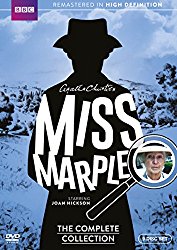 Click the image below to  |
I love Joan Hickson's portrayal and have watched the entire series repeatedly. Viewing the series had become a ritual with my wife and me during the winter months. Nothing is as satisfying as getting cozy with a hot cuppa, throwing a laprug over one's knees, and settling in for an afternoon. It's so cozy! |
|
I still greatly enjoy Margaret Rutherford as Miss Marple, too, although she is so different from the Miss Marple of the book series. Not so Geraldine McEwan's portrayal. At least, not for me. I think I would have liked her had I not anticipated a Miss Marple dramatization. But once I expected Miss Marple, it was disappointing to see something wholly other. (One wants to blame the directors and producers for this. Had I not been told up front this would be a Miss Marple, I think I would have enjoyed Ms. McEwan as the feisty [non-Miss Marple] detective she was portraying.) The result of this effrontery was that I didn't make it through even one of Ms. McEwan's performances as Miss Marple. |
Click Image to 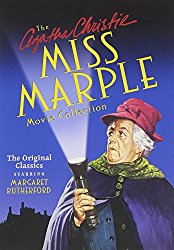 Click the image below to  |
Amazon and the Amazon logo are trademarks of Amazon.com, Inc. or its affiliates.

(This is a link through which I make a small commission if you buy. See here for more details.)